
How to Build Your Child’s Confidence in Football
Confidence in football rarely disappears overnight.
It usually fades quietly.
A child who once wanted the ball starts hiding behind teammates.
They hesitate before receiving.
They pass responsibility instead of taking it on.
Parents often describe it as, “They just don’t seem confident anymore.”
But confidence isn’t something children either have or don’t have.
It’s something that grows — or shrinks — based on the environment around them.
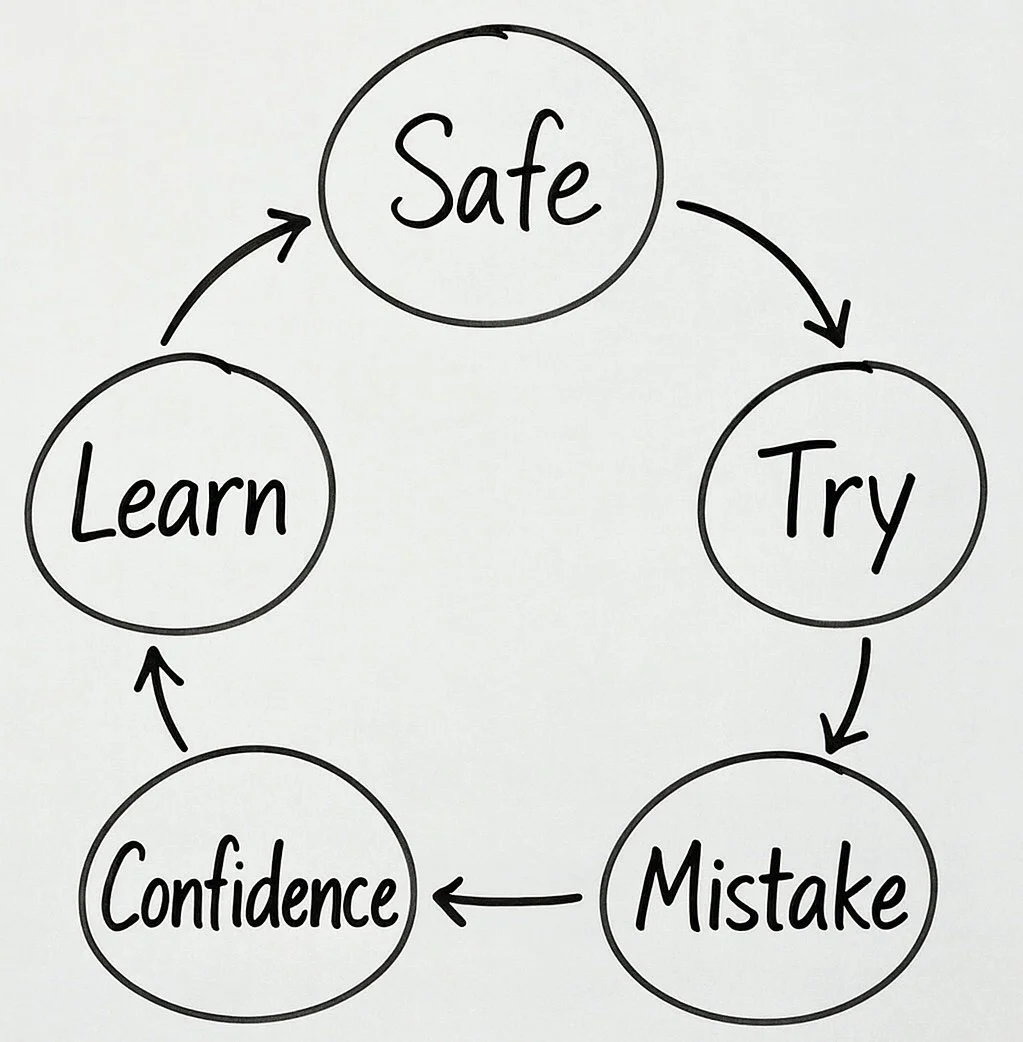
Confidence Grows From Feeling Safe
One of the biggest misconceptions in youth sport is that confidence comes from success.
In reality, confidence comes from feeling safe to try.
Children play bravely when they believe:
mistakes won’t lead to embarrassment
effort will be noticed
adults will stay calm
When those conditions exist, confidence grows naturally. Without them, children start protecting themselves by playing smaller, safer, and quieter.
Why Confidence Looks Different in Games
Parents often say, “They’re great at training, but freeze on game day.”
That’s because games introduce new pressures:
an audience
a score
louder voices
fear of letting others down
Confidence under pressure is not about toughness — it’s about familiarity. Children need time, repetition, and emotional safety to transfer what they do in training into matches.
This is normal development, not a problem to fix.
The Role Parents Play (Often Without Realising)
Parents influence confidence most in the moments around football, not during it.
Car rides, conversations at home, reactions after mistakes — these moments quietly shape how children feel about themselves as players.
When parents stay calm after errors, children learn mistakes are survivable.
When parents praise effort rather than outcomes, children learn to value courage.
When parents avoid comparison, children learn to trust their own journey.
None of this requires football knowledge. It requires emotional awareness.
Why Praise Matters — and How to Use It Well
Praise works best when it’s specific and process-focused.
Children benefit most when adults notice:
effort
bravery
decision-making
persistence
Comments like “I loved how you kept trying,” or “That was a great idea even though it didn’t work,” reinforce behaviours that build long-term confidence.
Constantly focusing on goals, wins, or mistakes can quietly teach children that their value is tied to outcomes.
Let Confidence Grow at Its Own Pace
Every child develops confidence differently.
Some are naturally expressive and bold. Others are thoughtful and cautious. Both are normal. Both belong in football.
Confidence can’t be rushed. It grows when children feel accepted exactly where they are, not pushed toward where adults think they should be.
As a coach, I’ve seen some of the most confident teenagers start as the quietest eight-year-olds — simply because they were given time.
A Final Thought
If you want to build your child’s confidence in football, focus less on performance and more on experience.
Create an environment where:
mistakes are normal
effort is valued
enjoyment comes first
Confidence isn’t built by telling children to believe in themselves.
It’s built when adults show, again and again, that they believe in them — no matter what happens on the pitch.
Suggested Next Reads (for curious parents)
Why Kids Freeze in Games — understanding pressure and overload
What to Say After the Game — conversations that build confidence
Mistakes, Learning, and Development — why errors matter
Player Development Roadmaps — what progress really looks like
Finished reading? Back to:
